Tree Health & Care in Little Rock, AR
Diagnosis and treatment that catches problems early — assessments, disease and pest treatment, fertilization, and structural support.
Removal is always the last resort. Most tree problems, caught early enough, can be treated — and a mature tree that took decades to grow is worth trying to save before reaching for a chainsaw. All Tree Control's health and care division focuses on keeping trees alive and strong: diagnosing what's actually wrong, treating disease and pests directly, and correcting the soil and structural conditions that cause decline in the first place.
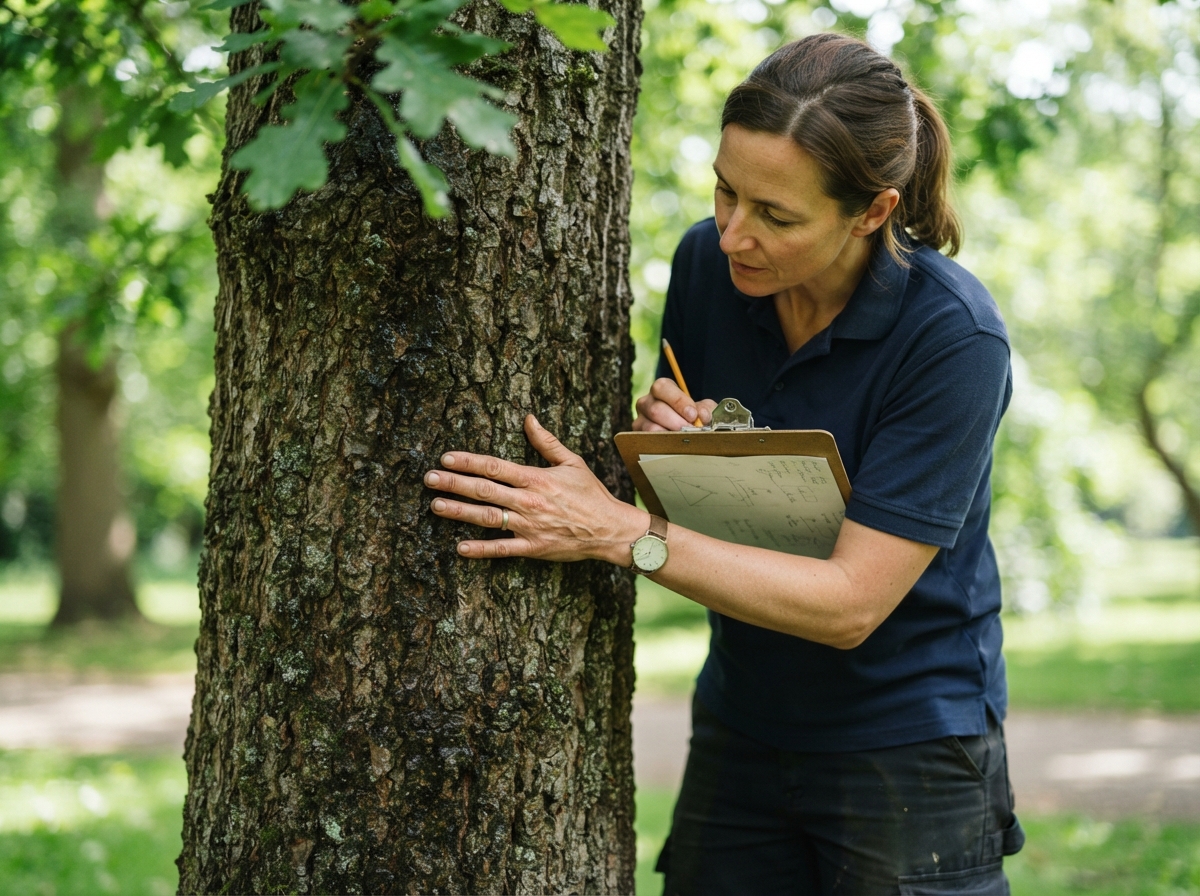
Central Arkansas's clay-heavy soil, humid summers, and occasional drought stretches create a specific set of stresses for local trees, from oak wilt and root rot to bagworms and scale insects. An arborist trained to recognize these regional patterns can often tell the difference between a tree that's simply stressed and one that's genuinely in decline, which matters enormously for treatment decisions. We start every health visit with a full assessment, then recommend treatment options with honest odds — we won't sell you a treatment plan for a tree that's already too far gone.
Our two most-requested health services are below, followed by three additional care specialties available throughout the Little Rock metro.
Our Most-Requested Health & Care Work
Insect & Pest Treatment
Bagworms, borers, scale insects, and aphids are among the most common pest problems we see on central Arkansas trees, and each requires a different treatment approach depending on the insect's life cycle and how deeply it has established itself. Left untreated, boring insects in particular can girdle a tree from the inside and cause damage that's irreversible by the time it's visible from the ground. We identify the specific pest first, since misapplied treatment wastes money and can even harm beneficial insects that would otherwise help control the problem naturally. Treatment options range from targeted trunk injections for borers to systemic soil treatments for sap-feeding insects, and we schedule follow-up visits to confirm the infestation has actually cleared rather than just quieted down temporarily.
Deep Root Fertilization
Established trees in neighborhoods with compacted or clay-heavy soil often can't access the nutrients they need through surface feeding alone, especially where construction activity, foot traffic, or turf competition have stripped topsoil of its nutrient content. Deep root fertilization injects a slow-release nutrient blend directly into the root zone, well below the surface, where a tree's active feeder roots can actually use it. This is one of the simplest, lowest-cost ways to improve a struggling tree's vigor, and we frequently recommend it alongside other treatments, since a well-fed tree recovers from disease, pests, and storm damage far more effectively than a nutrient-stressed one.
Tree Cabling & Bracing
Some trees have structural weaknesses — a split trunk, a weak branch union, or co-dominant leaders — that don't require removal but do need physical support to prevent failure. Cabling installs high-strength steel cable between major limbs to limit how far they can move independently during wind, while bracing uses threaded rods to reinforce a split or weak union directly. Both techniques let you keep a valuable or sentimental tree that would otherwise be a structural risk, and they're common on large, older shade trees in established neighborhoods across Little Rock and North Little Rock where mature canopy is part of what makes a property valuable. We inspect existing cable and brace systems as part of routine health visits, since older hardware can loosen or corrode over time.
What Sets Our Health & Care Team Apart
- ✓ Honest assessments — no upsell on lost causes
- ✓ Regionally trained in central Arkansas pests & disease
- ✓ Follow-up visits to confirm treatment success
- ✓ Soil and root-zone focused solutions
- ✓ Structural support options before removal
- ✓ Free written estimates, no obligation
Health & Care Service Across the Metro
Tree Health Questions
Sparse or discolored leaves, dieback in the upper canopy, fungal growth at the base, and bark that's peeling or cracking are all signs worth having checked. A health assessment can usually tell the difference between temporary drought stress and a more serious disease or pest problem within a single visit.
Often, yes, especially if caught early. Many common diseases and pest infestations in central Arkansas respond well to targeted treatment when addressed before they spread through the tree's vascular system. We'll always give you an honest assessment of a tree's chances before recommending treatment over removal.
Yes, particularly for trees in yards where topsoil has been compacted or stripped during construction, which is common in newer central Arkansas neighborhoods. Deep root fertilization delivers nutrients directly to the root zone where compacted or clay-heavy soil would otherwise block them.
Worried About One of Your Trees?
Get a free, written estimate and honest assessment — no pressure, no obligation.