Crown Reduction in Little Rock, AR
Selectively reduce a tree's height and spread while keeping its natural shape and long-term health intact.
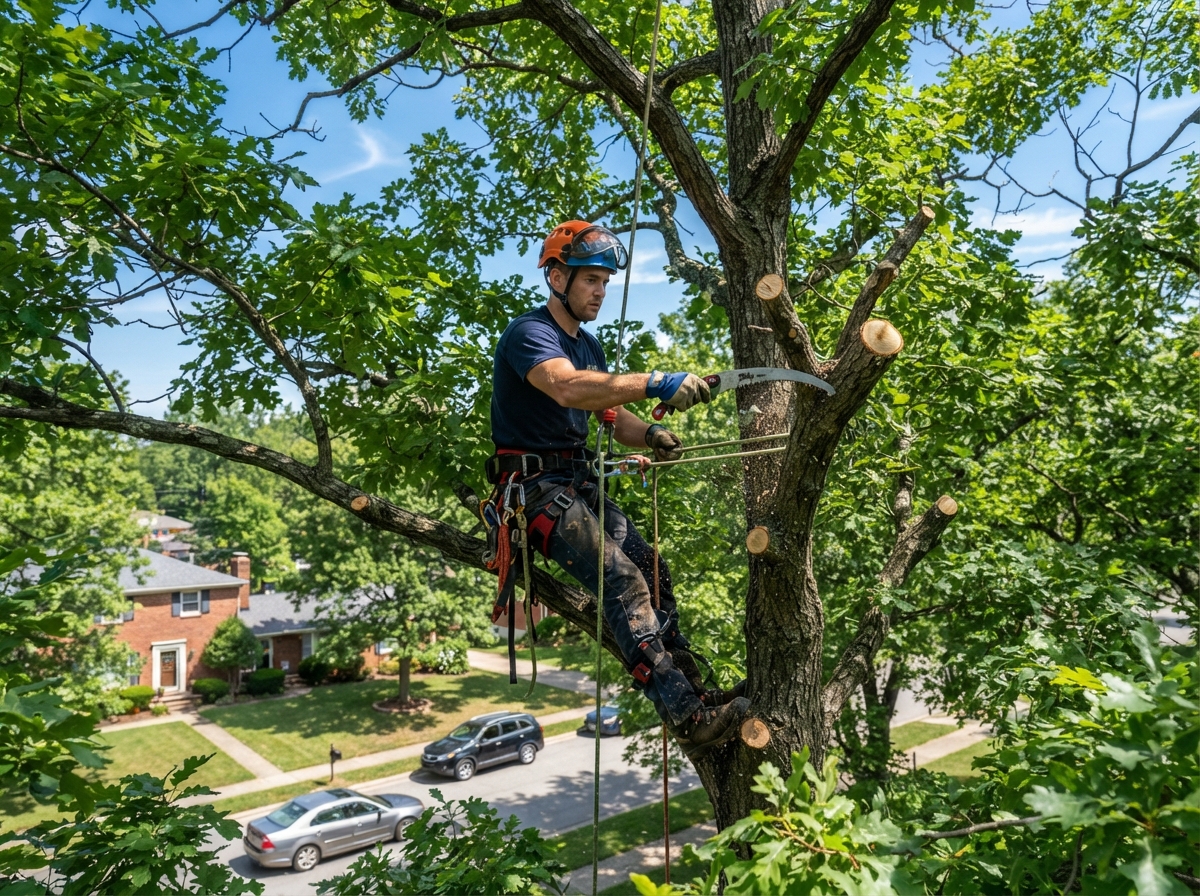
Crown reduction is the process of decreasing a tree's overall height and spread without damaging its structure or long-term health — a common need when a tree has outgrown its space, overhangs a roofline, or has become too large relative to the rest of the landscape. Unlike topping, which hacks branches at arbitrary points and leaves the tree vulnerable to decay and weak regrowth, crown reduction makes each cut back to a lateral branch large enough to take over as the new terminal growth point. The result is a smaller tree that still looks like a tree, not a stump with sprouts.
Homeowners in the Little Rock metro most often request crown reduction for large shade trees planted too close to a house decades ago, for view or sunlight concerns where a tree has grown to block a window or garden bed, or simply to bring an overgrown ornamental tree back into proportion with the yard. We assess the tree's species, health, and target reduction size before starting, since some species tolerate significant reduction well while others need a lighter touch spread across multiple visits. As a general practice, we avoid removing more than about a quarter of a tree's live canopy in a single session, since removing too much at once can shock even a healthy, mature tree.
After a crown reduction, the tree will look noticeably smaller and more compact, but the cuts are made to encourage natural, structurally sound regrowth rather than a burst of weak water sprouts. We clean up all cut material and haul it away, and we're happy to schedule a follow-up visit in future years to maintain the new size as the tree continues to grow.
- ANSI A300-standard reduction cuts, not topping
- Species-specific reduction limits to avoid shock
- Preserves natural shape and structural integrity
- Full debris cleanup and haul-away included
Explore Sibling Services
Crown Reduction Questions
No, and this distinction matters. Topping cuts branches at arbitrary points, leaving stubs that decay and regrow weakly. Crown reduction makes cuts back to a lateral branch large enough to take over growth, which keeps the tree structurally sound while still reducing its overall size.
As a general rule, we avoid removing more than about a quarter of a tree's live canopy in a single visit to avoid shocking it. Significant size reductions are often done gradually over two or more visits, especially on mature trees.
Ready for a Crown Reduction?
Get a free, written estimate from a local arborist — no pressure, no obligation.