Tree Trimming & Pruning in Little Rock, AR
Structural pruning that improves shape, health, and storm resistance — from a single ornamental tree to a full-property canopy plan.
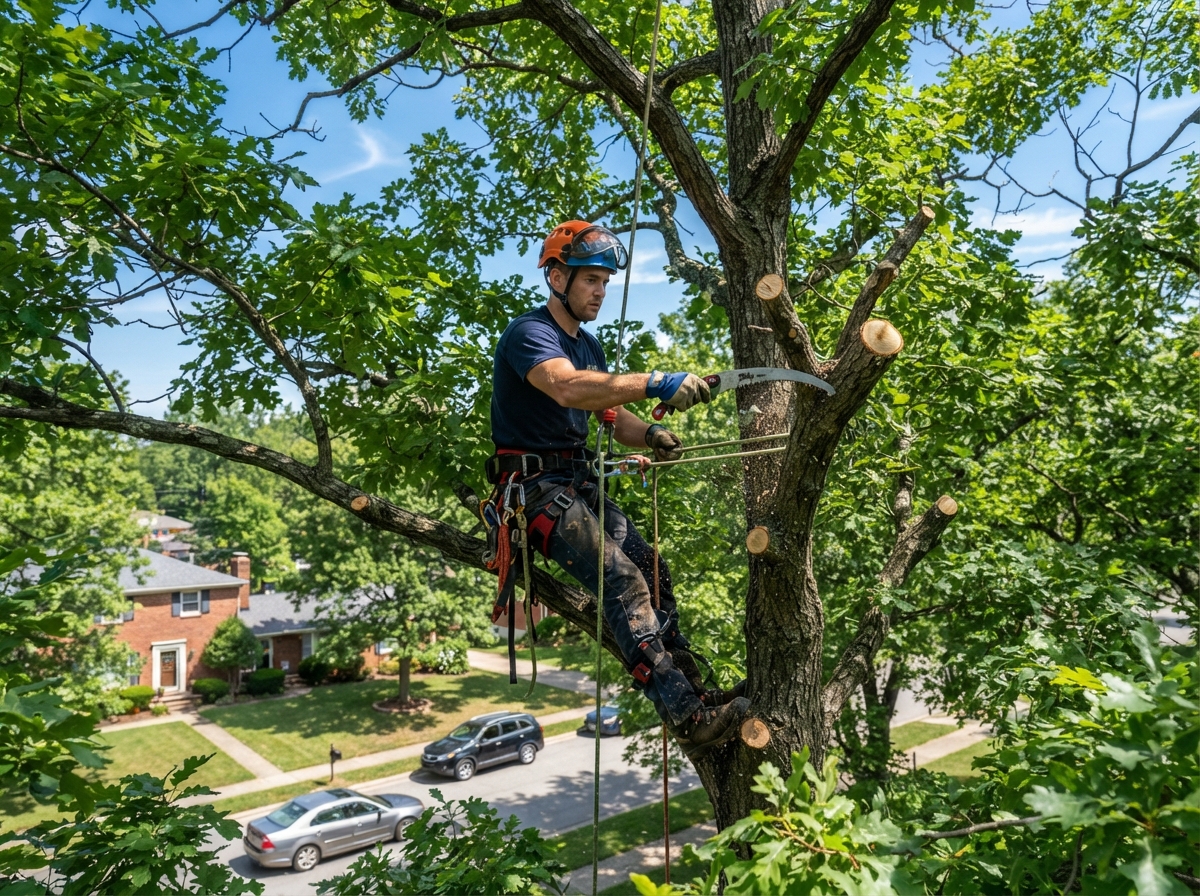
Good pruning is one of the least expensive things you can do for a tree's long-term health, and one of the most commonly done wrong. Topping, over-thinning, and improper cuts are common mistakes that weaken a tree's structure and shorten its life, even though the tree may look fine for a season or two afterward. Our crews follow ANSI A300 pruning standards, meaning every cut is made just outside the branch collar to let the tree heal properly rather than leaving an open wound for decay to enter.
Central Arkansas's mix of humid summers and ice-prone winters puts real stress on tree limbs, which is why we approach pruning as much as a safety measure as an aesthetic one. A well-pruned tree sheds wind load more evenly, resists ice accumulation on overextended limbs, and is far less likely to drop a branch on your roof or car during a storm. Whether you need a single overgrown maple brought back into shape or a whole-property trim ahead of storm season, we scope the work on-site and give you a written estimate before any climbing gear comes out.
Our two most-requested trimming services are below, along with three additional pruning specialties available throughout the Little Rock metro.
Our Most-Requested Trimming Work
Crown Thinning
Crown thinning removes select interior branches to let more light and air move through a tree's canopy without changing its overall size or shape. This reduces wind resistance during storms, cuts down on the weight a tree carries during ice events, and can noticeably improve the health of grass or garden beds struggling in heavy shade underneath a dense canopy. It's a favorite request from homeowners with large shade trees over a patio or pool, where a lighter canopy means more dappled sunlight without losing the tree's cooling effect. We thin evenly throughout the crown rather than stripping one section, which keeps the tree's silhouette natural and avoids the "lion-tailed" look that comes from over-thinning the interior and leaving foliage only at the branch tips.
Deadwood Removal
Dead branches don't bend in the wind the way live wood does, which makes them one of the most common sources of storm-related property damage and personal injury. Deadwooding removes dead, dying, and broken limbs throughout the canopy, often before they're visible from the ground, especially high in a mature oak or pine. Beyond the safety benefit, removing deadwood improves a tree's appearance and can slow the spread of decay or disease from a dying limb into otherwise healthy wood. We recommend a deadwooding pass anytime you notice bark sloughing, brittle limbs, or branches with no leaves while the rest of the tree is fully leafed out — those are the first visible signs it's time for a closer look.
Structural Pruning
Structural pruning is about training a tree's long-term shape, and it matters most while a tree is still young. Correcting co-dominant stems, narrow branch angles, and competing leaders early prevents the kind of weak unions that split apart in a storm ten or twenty years later. For newly planted or young trees across new-construction neighborhoods in Conway, Benton, and Bryant, an early structural pruning visit is one of the best investments a homeowner can make in a tree's future. For mature trees with existing structural issues, we prune conservatively over multiple visits rather than removing too much at once, which keeps the tree healthy while gradually improving its long-term stability.
What Sets Our Pruning Crews Apart
- ✓ ANSI A300 pruning standards on every job
- ✓ Certified arborists plan cuts, not just climbers
- ✓ Species- and season-aware timing
- ✓ Storm-prevention focus, not just aesthetics
- ✓ Full debris cleanup after every visit
- ✓ Free written estimates, no obligation
Other Ways We Help Your Trees
Trimming Service Across the Metro
Trimming & Pruning Questions
Most mature shade trees in central Arkansas do well with pruning every 2-3 years, while young trees benefit from lighter, more frequent shaping every year to establish good structure early. Fast-growing species and trees near power lines or rooflines may need annual attention.
Timing matters more for some species than others. Heavy pruning during active spring growth can stress a tree, and certain species like oaks are best pruned in dormant winter months to avoid attracting disease-carrying insects. We plan timing around species and season as part of every job.
Yes — removing weak, crossing, or overextended limbs before a storm significantly reduces the chance of breakage. Our storm-prevention trimming targets exactly the failure points that cause the most damage during Arkansas's spring and summer thunderstorms.
Ready to Have Your Trees Pruned?
Get a free, written estimate from a local arborist — no pressure, no obligation.