
Tree Health Assessments in Little Rock, AR
A thorough on-site evaluation that identifies exactly what's affecting your tree, and what to do about it, before problems become irreversible.
A tree health assessment is a diagnostic visit, not a sales pitch — the goal is to give you an honest, accurate picture of a tree's condition so you can make an informed decision, whether that's treatment, monitoring, or in some cases, removal. Homeowners typically request an assessment when a tree looks "off" in some way: thinning or discolored leaves, dieback in the upper canopy, unusual bark texture, fungal growth near the base, or simply a gut feeling that something has changed since last season.
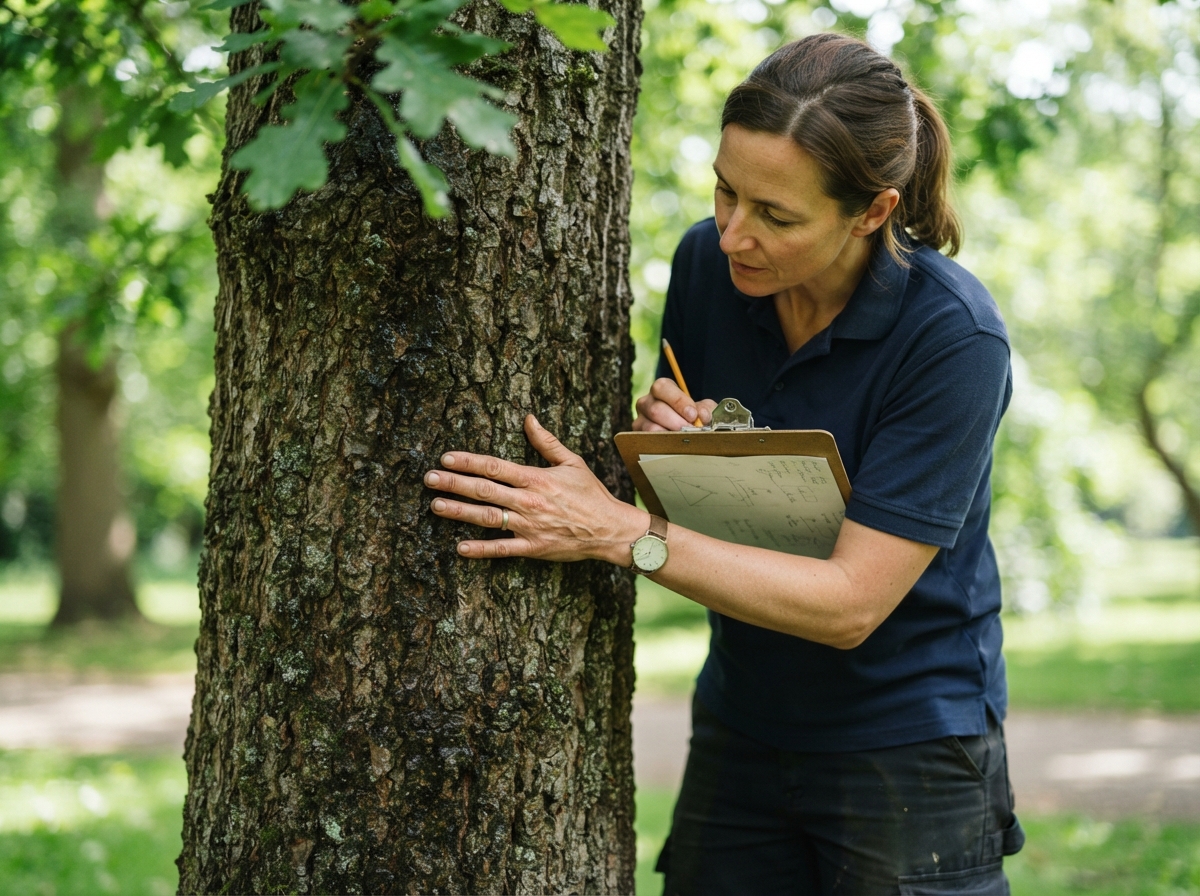
During the visit, our arborist inspects the canopy for die-back patterns, checks bark and trunk for cracks, cankers, or insect activity, examines the visible root flare and surrounding soil for signs of girdling roots or fungal growth, and considers the tree's recent history — nearby construction, changes in grading, or drought stress from the past year or two. Central Arkansas's clay-heavy soil and swings between drought and heavy rainfall create specific stress patterns that a locally trained arborist recognizes faster than a generic checklist would catch.
Every assessment ends with a written summary explaining what we found, what it likely means, and what we'd recommend next — whether that's a treatment plan, a monitoring schedule, structural support, or, if the tree's decline is too advanced, an honest recommendation toward removal. We never recommend removal as a first resort; if a tree has a real chance at recovery, we'll tell you.
- Canopy, trunk, bark & root-flare inspection
- Written summary and recommendations included
- Regionally trained in central Arkansas tree stress patterns
- Honest assessment — no unnecessary upsells
Explore Sibling Services
Health Assessment Questions
Most single-tree assessments take 20 to 40 minutes on-site, including a visual inspection of the canopy, trunk, and visible root flare. Whole-property assessments covering multiple trees take longer and are scheduled accordingly.
Yes, every assessment includes a written summary of findings and recommendations, which is useful for your own records, for HOA documentation, or for insurance purposes if a tree's condition is in question.
Worried About a Tree's Health?
Get a free, honest on-site assessment — no pressure, no obligation.